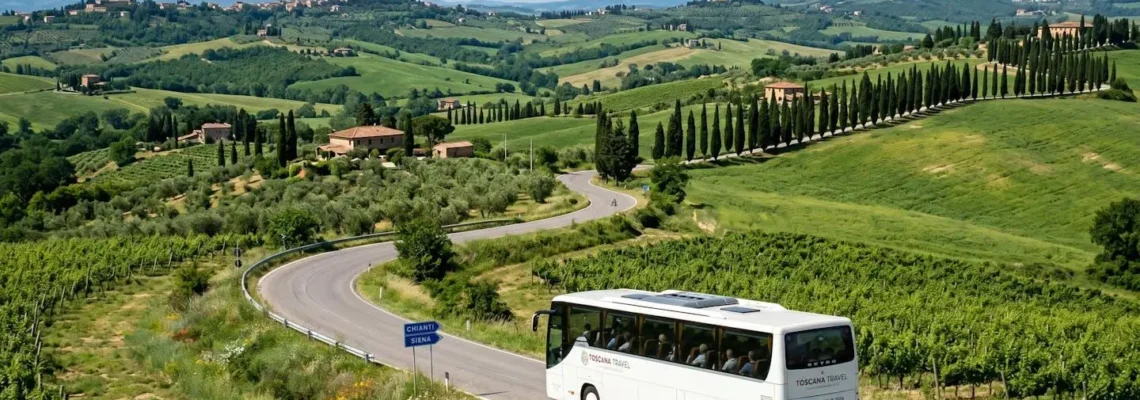
Navigating between Tuscany’s hilltop towns while absorbing centuries of Renaissance history presents a familiar challenge for travelers: fragmented transport schedules, language barriers at ticket counters, and guidebooks that lack the context you need in the moment you’re looking at a monument. According to IRPET‘s 2024 tourism report, international arrivals to Tuscany surged 10.3 percent, yet many visitors still piece together intercity trips using multiple providers, missing cultural depth along the way. Tootbus Tuscany offers a different model: intercity bus transport linking Florence, Pisa, Siena, Lucca, and San Gimignano, paired with an AI-powered audio guide that answers your questions in real time — in over 50 languages. The service combines practical logistics (multi-day passes, modern buses, flexible routes) with cultural immersion through Tootie, the AI companion that goes beyond pre-recorded commentary to deliver interactive storytelling as you travel.
What this guide covers for your Tuscany planning:
- Intercity bus pass connecting Florence, Pisa, Siena, Lucca, and San Gimignano across 2 scenic routes
- AI audio guide (Tootie) in 50+ languages with real-time Q&A capability — ask follow-up questions as you travel
- Pass options: 2, 3, or 5 consecutive days starting from €89, activated on first scan
- Included Tootwalk pedestrian audio tours for exploring city centers on foot
- Ideal for travelers prioritizing cultural depth without the complexity of renting a car in Italy
What is the Tootbus Tuscany Pass?
Tootbus Tuscany is an intercity transport service, not a traditional hop-on hop-off city sightseeing tour. As Florence Daily News clarified in April 2026, the service focuses on moving travelers between major Tuscan towns rather than circulating within a single city’s tourist district. Operated by RATP Dev (the international arm of Paris’s public transport authority), the pass provides access to modern coaches running two distinct routes: the Green Route (Florence-Pisa-Lucca, emphasizing coastal Renaissance landmarks) and the Terracotta Route (Florence-San Gimignano-Siena, showcasing medieval hill towns and Chianti countryside).
You purchase a multi-day pass valid for 2, 3, or 5 consecutive days. The countdown begins when you scan your digital ticket aboard your first bus, giving you control over when to activate the service. Pricing starts at 89 € for the shortest duration, according to The Florentine’s launch coverage, which noted the service represents Tuscany’s first regional pilot of this intercity model (active through October 31, 2026). During your validity window, you can board any scheduled departure on either route, planning days around morning trips to one city and afternoon returns, or splitting multiple destinations across your pass duration.
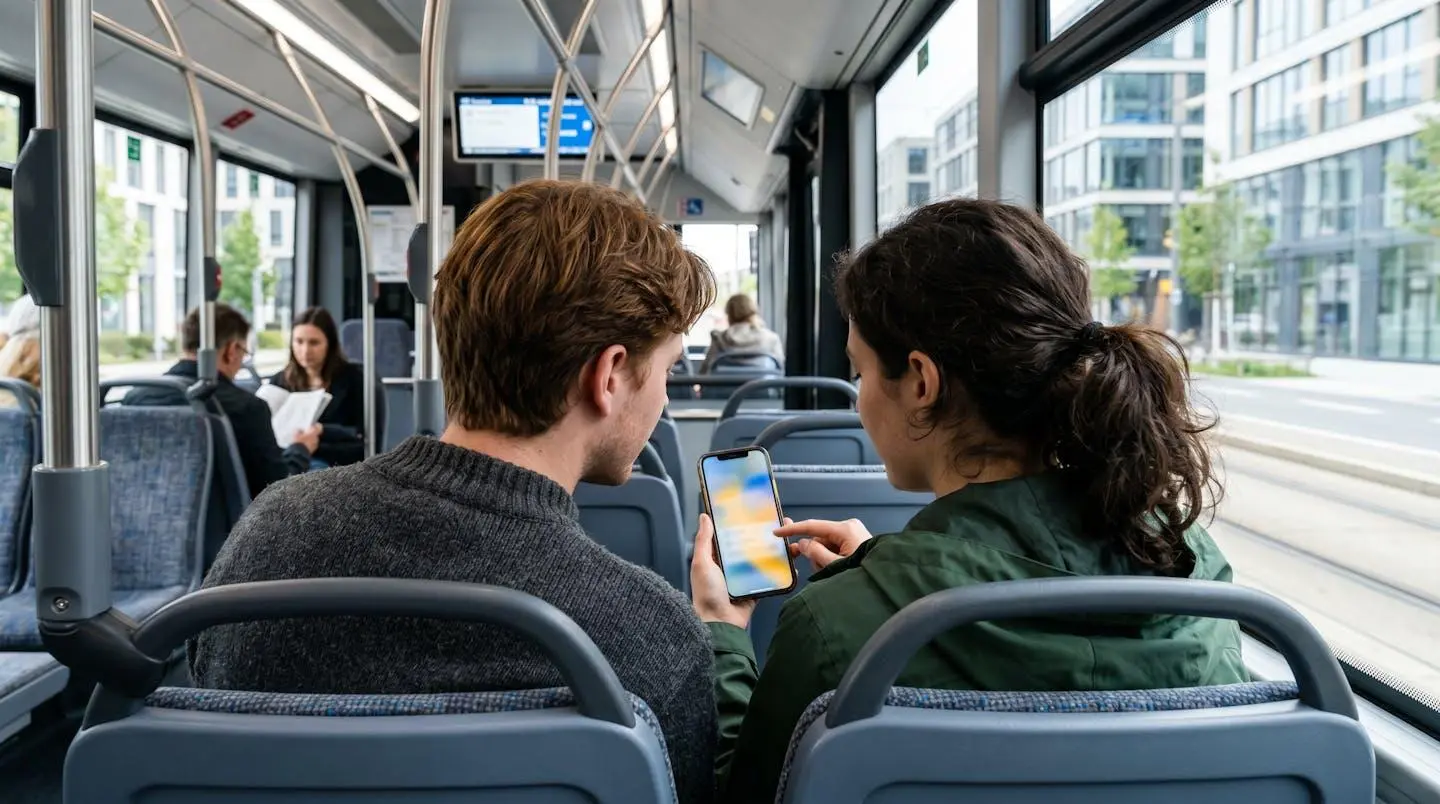
The core differentiator lives in the onboard experience: every bus features Tootie, an AI-powered guide accessible through the Tootbus app. Rather than playing a fixed audio loop, Tootie responds to typed or spoken questions in over 50 languages, providing historical context, local recommendations, and cultural anecdotes tailored to what you’re curious about at that moment. The system also includes a landmark-recognition feature — point your phone’s camera at a building or monument, and Tootie identifies it and shares relevant stories. Once you arrive in each city, the app unlocks Tootwalk pedestrian audio tours, allowing you to continue guided exploration on foot through neighborhoods, markets, and historic quarters.
How Tootbus Tuscany Transforms Your Italian Journey
The friction point for most first-time Tuscany visitors is balancing logistical simplicity with meaningful cultural understanding. Renting a car introduces Italy’s ZTL (limited traffic zones) in historic centers, where unauthorized entry triggers automatic fines. Booking individual train tickets between towns requires navigating Trenitalia schedules and pricing tiers, often without real-time cultural context once you arrive. Tootbus addresses both gaps by combining intercity connectivity with AI-guided storytelling that adapts to your language and interests.
Here’s how the system operates in practice: After purchasing your 2, 3, or 5-day pass online, you receive a digital ticket (QR code) via email. On your chosen start day, you board any scheduled Tootbus at a designated stop (Florence’s Santa Maria Novella station serves as the primary hub for both routes). A staff member scans your code, activating your pass validity period. Once seated, you open the Tootbus app and select your language from the 50+ available options. As the bus departs, Tootie begins narrating the route in your selected language, responding to typed or spoken questions in real time. The AI tailors depth to your engagement, providing brief overviews for casual listeners or detailed historical deep-dives for those wanting more.
The operational benefits compound across your trip. Language barriers dissolve when Tootie handles explanations in your native tongue, whether that’s English, Mandarin, Arabic, or Japanese. Families traveling with children access age-appropriate audio content designed to keep younger travelers engaged without oversimplifying for adults. Accessibility features include wheelchair-accessible buses (service animals welcome without restriction, pets allowed in carriers), free onboard Wi-Fi for real-time trip adjustments, and the flexibility to modify plans mid-journey — if Siena captivates you more than expected, use an extra day there and skip a secondary destination. Upon arrival in any of the five cities, Tootwalk unlocks thematic pedestrian routes (Renaissance art walks in Florence, medieval architecture trails in Siena), extending the guided experience beyond the bus at no additional cost. The result is a transportation method that doubles as cultural education, eliminating the gap between getting somewhere and understanding what you’re seeing once you arrive.
What Makes Tootie Different from Standard Audio Guides: Traditional bus tour commentary follows a fixed script, replaying the same information regardless of passenger interest. Tootie’s AI adapts in real time — ask “What’s the story behind that villa?” as you pass a hillside estate, and you’ll receive an immediate answer. The system supports 50+ languages with adult and children’s versions, updates content as routes evolve (not locked to a 2019 recording), and includes landmark-snapping: photograph a monument through the app, and Tootie identifies it and provides context. This interactivity transforms passive listening into active learning, particularly valuable for travelers who want depth beyond surface-level facts.
Routes & Itineraries: Choosing Your Path
Tootbus Tuscany operates two routes designed around distinct cultural and geographic themes. Your choice depends on whether Renaissance art and coastal plains or medieval hill towns and vineyard countryside better align with your interests and available time. Both routes originate in Florence, allowing you to base yourself in the regional capital and take day trips, or use the buses to hopscotch between towns if you’re changing accommodations.
Green Route: Florence, Pisa & Lucca — The Green Route targets travelers prioritizing iconic Renaissance landmarks and northern Tuscany’s Arno River valley. Florence anchors the route with the Uffizi Gallery, Duomo, and Ponte Vecchio — Tootie’s Florence commentary emphasizes Medici patronage, Brunelleschi’s architectural innovations, and the concentration of masterworks within a walkable historic center. Heading northwest, the route reaches Pisa in roughly 90 minutes. While the Leaning Tower dominates most itineraries, Tootie guides direct you to the adjacent Cathedral and Baptistery in Piazza dei Miracoli, often overlooked despite their Romanesque significance. The route continues to Lucca, a smaller city encircled by intact Renaissance-era walls (now a pedestrian promenade).

This route suits first-time Tuscany visitors or those with limited time who want to check off the region’s most recognizable landmarks. It also appeals to art enthusiasts focused on Renaissance painting and architecture, as all three cities house significant collections and structures from that period. The landscape trends flatter and greener than the Terracotta Route, with views of the Arno valley and glimpses of the Ligurian coast near Pisa.
Terracotta Route: Florence, San Gimignano & Siena — The Terracotta Route shifts south into Chianti wine country and the medieval hill towns that define postcards of rural Tuscany. Departing Florence, the route climbs into Chianti wine country, reaching San Gimignano’s UNESCO-listed skyline of 14 surviving medieval towers in roughly 90 minutes. Tootie’s commentary here focuses on the tower-building rivalries among wealthy families and the town’s role as a waypoint on pilgrimage routes to Rome. The compact historic center allows thorough exploration in 2 to 3 hours, including tastings of the local Vernaccia white wine.
Continuing southeast, the route reaches Siena, Tuscany’s Gothic counterpoint to Florence’s Renaissance dominance. Siena’s Piazza del Campo (the shell-shaped main square hosting the Palio horse race twice yearly) and black-and-white striped cathedral represent Italian Gothic architecture at its peak. Tootie provides context on the Florence-Siena rivalry that shaped both cities’ artistic and political development.
This route attracts repeat Tuscany visitors, wine enthusiasts, and travelers seeking countryside atmosphere over coastal plains. The medieval focus provides architectural and historical contrast to Florence’s Renaissance core, while the landscape delivers the cypress-lined hills and vineyard vistas often associated with Tuscan imagery.
The comparison below synthesizes the key differences between both routes to guide your selection. Each row contrasts the cities served, cultural emphasis, landscape character, and the traveler profile best suited to that path.
| Route | Cities Covered | Cultural Focus | Landscape Type | Best For |
|---|---|---|---|---|
| Green | Florence, Pisa, Lucca | Renaissance art & architecture | Arno valley, coastal plains | First-time visitors, art museums, iconic landmarks |
| Terracotta | Florence, San Gimignano, Siena | Medieval towns, Gothic architecture | Rolling hills, vineyards, Chianti countryside | Repeat visitors, wine lovers, rural landscapes |
Choosing Your Pass: 2, 3, or 5 Days?
Pass duration selection hinges on three factors: your total trip length, the number of cities you want to visit thoroughly (not just photograph), and whether you prefer intensive sightseeing or leisurely exploration with margin for spontaneity. A 2-day pass covers one complete route with time for deeper dives in 1 or 2 cities. A 3-day pass allows one full route plus flexibility for return trips to favorites or mixing select stops from both routes. A 5-day pass accommodates both routes comprehensively or enables a slower pace with repeat visits and extensive Tootwalk usage in each destination.
- If your total Tuscany trip is 2 to 3 days:
Choose the 2-day pass and focus on one route (Green OR Terracotta). Example itinerary: Day 1 Florence to Pisa with afternoon return, Day 2 Florence to Lucca with evening Tootwalk exploration in Florence. This duration prioritizes depth over breadth, allowing meaningful time in 2 to 3 cities rather than rushed photo stops.
- If your total Tuscany trip is 4 to 6 days:
Choose the 3-day pass to cover one full route plus flexibility. Example: Green Route over 2 days (Florence-Pisa-Lucca), then use the third day for a Terracotta Route highlight (San Gimignano) or a return trip to Siena if you’re changing accommodations. This duration balances main cities with leisurely pacing and room for unplanned discoveries.
- If your total Tuscany trip is 7+ days:
Choose the 5-day pass for maximum flexibility. Example: Complete both routes (Green Days 1-2, Terracotta Days 3-4), then use Day 5 to revisit your favorite city or take advantage of Tootwalk in multiple towns. This duration suits travelers wanting in-depth exploration, repeat visits to preferred destinations, or the freedom to adjust plans based on weather and energy levels.
Pricing starts at €89 for the 2-day option, with incremental increases for longer durations (specific 3-day and 5-day pricing available on the official booking platform). When calculating value, factor in the cost savings versus individual train tickets (Florence to Pisa one-way typically runs €8 to €15 depending on train type, but that’s per trip without audio guidance) and the inclusion of Tootwalk pedestrian tours in each city (comparable standalone walking tour apps charge €5 to €10 per city). For travelers planning to visit 3+ cities with cultural commentary as a priority, the pass typically breaks even by the second day and delivers clear savings on day three onward.
Maximize Your Pass Value: Activate your pass on a weekday rather than a weekend — some intercity routes reduce departure frequency on Saturdays and Sundays, limiting your scheduling flexibility. Use Tootwalk during “downtime” between bus trips (morning arrival in a city, evening before departure) to extract additional value from the app without consuming bus travel days. Download offline maps and your selected language pack before your first trip, as connectivity between towns can be inconsistent in rural stretches. Finally, check the seasonal schedule: the pilot service runs through October 31, 2026, and winter months may see adjusted departure times compared to peak summer frequency.
Your Questions About Traveling Tuscany by Bus
Do I need to reserve specific buses in advance, or can I board anytime?
Your pass grants access to any scheduled departure during your validity window, but buses run on fixed timetables (not 24/7 on-demand service). Check the app for current departure times from each city — typical routes offer 2 to 4 departures daily in each direction during peak season. No individual trip reservations required; simply arrive at the stop 10 minutes before the scheduled departure and board with your active pass.
Is Tootie’s AI guide actually better than traditional audio tours?
Traditional audio guides play a linear script — Track 7 discusses the Duomo whether you’re curious about architecture or not. Tootie allows real-time Q&A: ask why Brunelleschi’s dome was revolutionary, and you receive an immediate explanation tailored to your question. Follow up with “What other buildings did he design?” and the conversation continues. This interactivity proves particularly valuable for travelers with specific interests (art history, engineering, local cuisine) who want depth on select topics rather than surface coverage of everything.
Can I use the pass for only one route, or switch between Green and Terracotta?
Your pass provides access to both routes during the validity period. Mix and match as your itinerary allows — take the Green Route to Pisa on Day 1, then switch to the Terracotta Route for San Gimignano on Day 2. The only constraint is the consecutive-day countdown (a 3-day pass expires 72 hours after first activation, regardless of whether you’ve used all routes).
What if I don’t speak Italian — will I struggle with logistics?
Tootie supports 50+ languages including English, eliminating the cultural commentary barrier. Bus staff generally understand basic English for boarding logistics (scanning passes, confirming stops). The app handles most communication needs — route maps, departure times, and Tootwalk pedestrian tours all function in your selected language. You’ll encounter Italian in cities (restaurant menus, museum signage), but transportation and guided content remain accessible without Italian fluency.