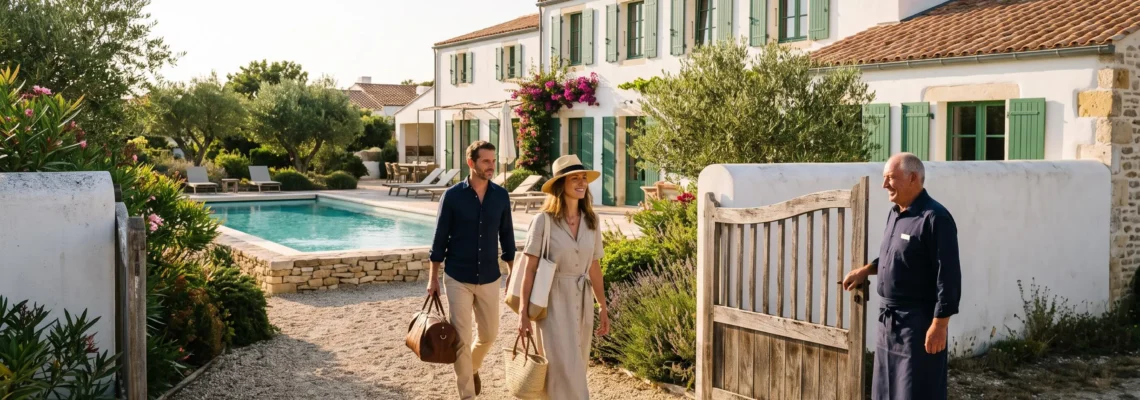
Direct answer: The best places to look for a luxury villa Île de Ré are typically around Saint-Martin-de-Ré (historic harbour atmosphere and easy access to amenities), Les Portes-en-Ré (more secluded, nature-led setting close to dunes and beaches), and Ars-en-Ré (quiet prestige near salt marshes). The “best” option depends on whether you prioritise harbour life, privacy, or a calmer village feel.
To avoid paying a premium for a villa that feels average, it helps to separate location (village and micro-area) from verifiable standards (official classification, tangible features, and clear service terms). The aim is simple: compare like-for-like, ask the right questions early, and book with enough lead time for peak weeks.
What to check before you book a high-end villa on Île de Ré
- Choose the village first: Saint-Martin-de-Ré (lively port), Les Portes-en-Ré (exclusive and natural), Ars-en-Ré (quiet prestige).
- Verify objective quality: look for the official “meublé de tourisme” star rating (1 to 5) and confirm what is included.
- Assess real luxury: privacy, outdoor space, pool details, parking, maintenance, and who manages issues on site.
- Book early for summer: high-end supply is limited, and the best homes are reserved first.
- Reduce risk: insist on written terms (deposit, cancellation, inventory) and avoid vague “luxury” claims.
Where Are the Best Luxury Villas Located on Île de Ré?
If you are asking “Which part of Île de Ré should I stay in for a luxury villa?”, start with three names that come up again and again in official destination positioning: Saint-Martin-de-Ré, Les Portes-en-Ré, and Ars-en-Ré. Destination Île de Ré (the official tourism board) highlights Saint-Martin-de-Ré for its UNESCO-listed fortifications, Ars-en-Ré as one of “France’s Most Beautiful Villages”, and Les Portes-en-Ré for its preserved natural setting.
For a trustworthy baseline on the villages and their identity, you can cross-check the island’s official presentation via presentation officielle des villages de l’île.
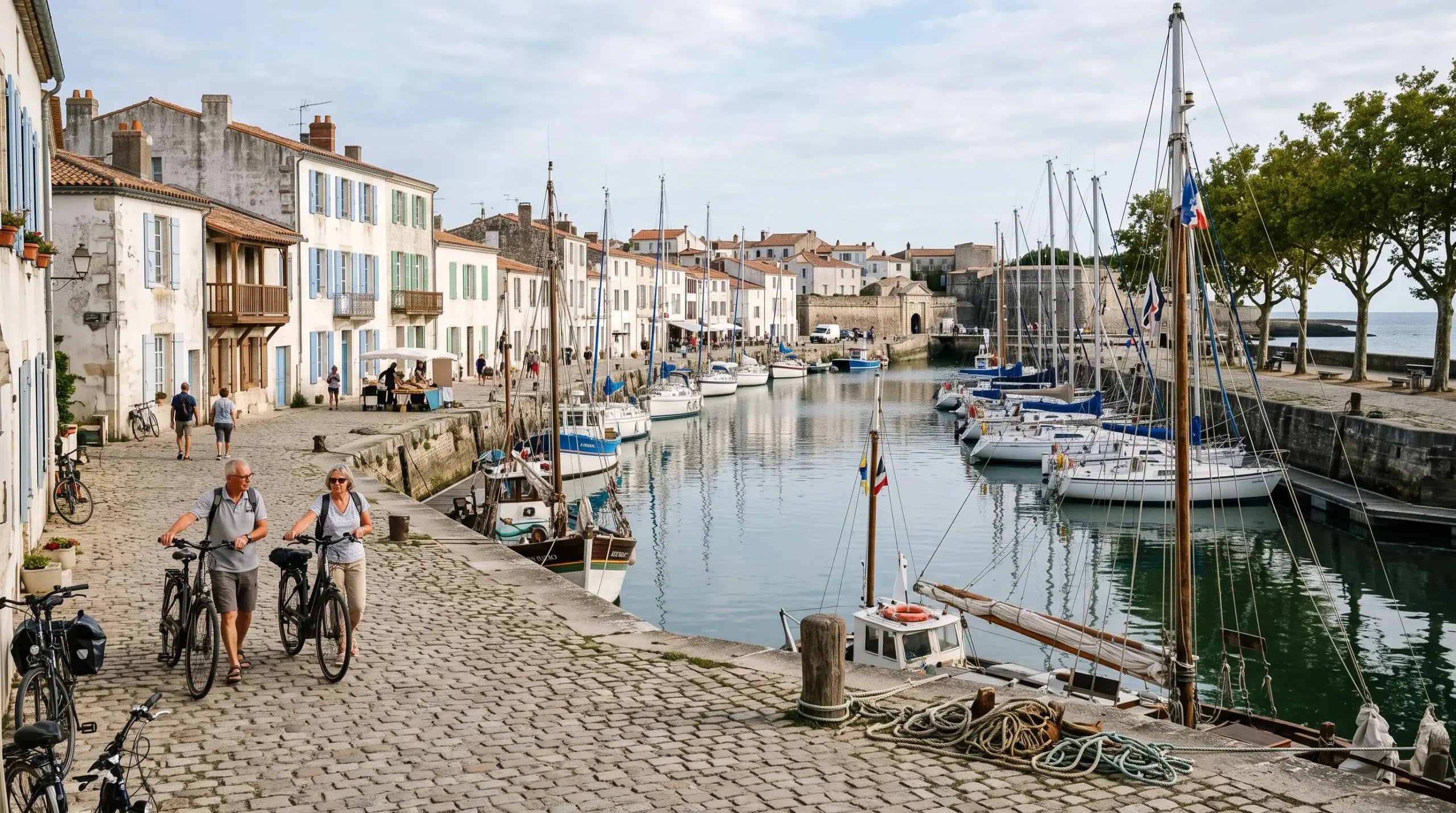
Saint-Martin-de-Ré and the north coast: who is it best for?
Saint-Martin-de-Ré is often chosen for a premium stay when you want walkable convenience: harbour restaurants, shops, and a strong “village-at-night” atmosphere. In practical terms, luxury here can mean a well-finished house inside or near the historic core, with quick access to the port—at the cost of less seclusion than more remote parts of the island.
A simple way to arbitrate: if you imagine evenings out without driving, or you value being close to a “centre” feel, Saint-Martin-de-Ré is the most straightforward choice. If your definition of luxury starts with silence and distance from footfall, you will likely prefer the western end.
Les Portes-en-Ré: privacy, nature, and a more “retreat” style stay
Les Portes-en-Ré is positioned as a preserved natural setting by the official destination information, which aligns with what many high-end travellers seek: space, discretion, and proximity to dunes or beaches. Here, the villa experience is often less about being “near everything” and more about feeling sheltered—behind walls, greenery, and generous outdoor areas.
Use Les Portes-en-Ré as a search anchor when your non-negotiables are privacy (not overlooked), outdoor living (terrace, garden), and the sense of staying somewhere deliberately set back rather than central.
Ars-en-Ré: quiet prestige near salt marshes
Ars-en-Ré tends to suit travellers who want a refined, calmer village atmosphere. It is officially highlighted as being among Les Plus Beaux Villages de France, which signals heritage appeal rather than nightlife. For a luxury rental, the trade-off is usually clear: more tranquillity, fewer “big town” conveniences at your doorstep, and a stay that revolves around the landscape and slower rhythms.
Concrete contrast (hypothetical): a villa in central Saint-Martin-de-Ré can feel “boutique and animated” (harbour life nearby), while a property in Les Portes-en-Ré can feel “estate-like” (more land, less passing traffic). Neither is automatically superior—the village sets the tone.
What Criteria Define a Genuine Luxury Villa on the Island?
On Île de Ré, the word “luxury” is often used loosely in listings. To reduce the risk of disappointment, focus on criteria you can verify before paying: official classification when available, the physical attributes of the home, and the precision of what is included (maintenance, linen, pool heating, parking, on-call support).
744classed holiday rentals
In 2024, Charentes Tourisme reports 744 meublés de tourisme classés in the Communauté de communes de l’Île de Ré—useful context when you filter for officially rated stock.
That context comes from chiffres clés du tourisme en Charente-Maritime, which also notes strong demand for seasonal rentals on the island (a factor that tightens choice in peak periods).
Is the official “meublé de tourisme” classification worth checking?
Yes—when it exists, it is one of the few official quality indicators you can ask for. In France, the “meublé de tourisme” framework defines this type of furnished holiday accommodation, and the official classification uses a star scale.
As summarised in a parliamentary document, the legal definition appears in Article D.324-1 of the Code du tourisme, and the classification grid is set by the arrêté of 2 August 2010, with accommodation rated from 1 to 5 stars: cadre réglementaire du classement officiel.
Standing vs stars: a star rating helps standardise baseline comfort and equipment, but it does not guarantee “quiet”, “view”, or “privacy”—you still need to check the micro-location and the layout.
Which physical features most reliably signal real luxury?
When you compare two “premium” listings, prioritise elements that are hard to fake in photos or copywriting. Ask for clarifications in writing (email is enough) and make sure answers match the inventory/contract.
- Privacy and exposure: not overlooked, controlled sightlines from neighbours and the street.
- Outdoor space that works: terrace size, shaded dining, wind protection, lighting.
- Pool specifics: dimensions, security features if relevant for children, and whether heating is included or optional.
- Access and parking: private parking on-site can be a real comfort point in busy weeks.
- Materials and maintenance: joinery, flooring, bathrooms, and signs of ongoing upkeep.
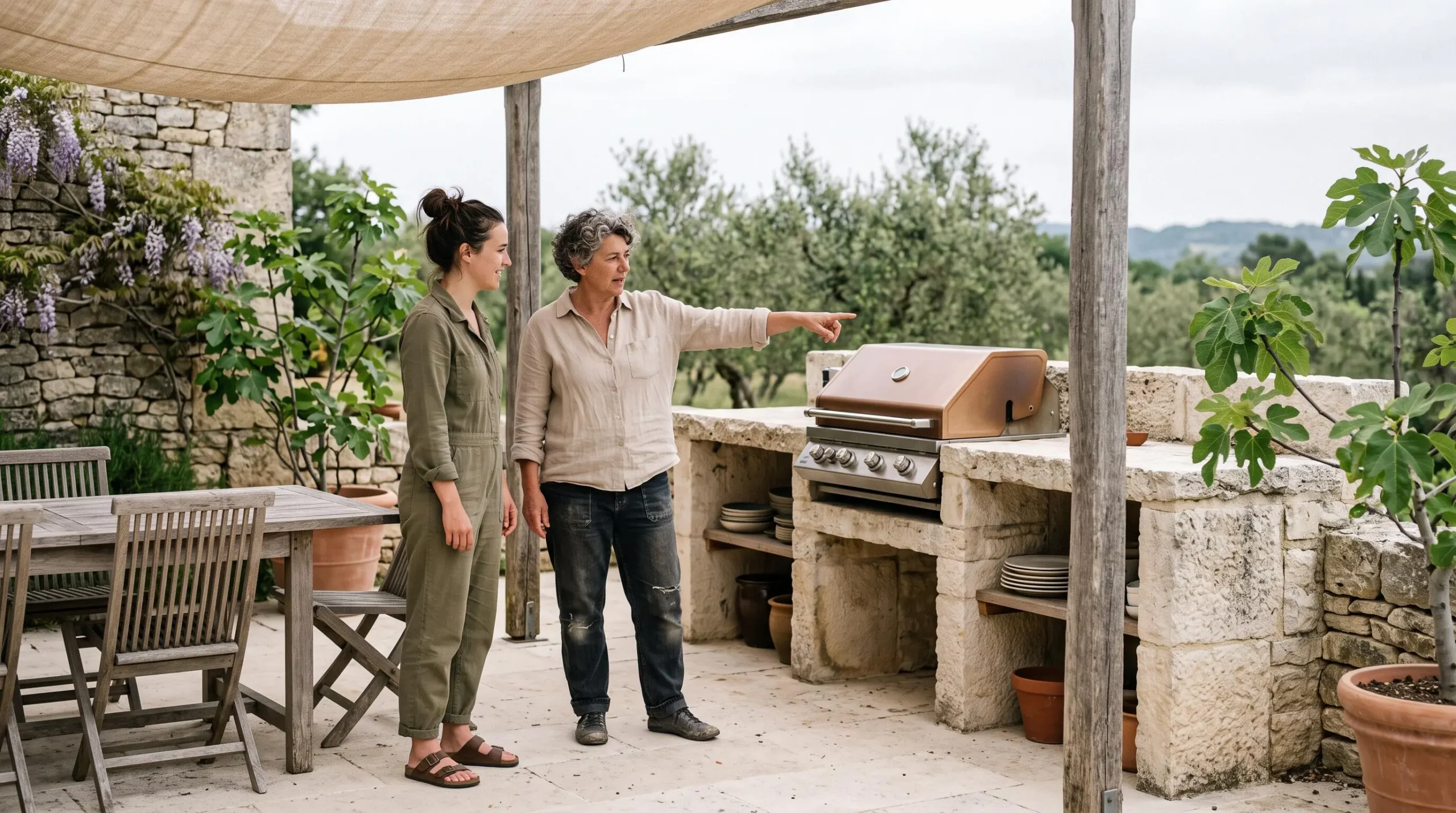
Which services matter most in a high-end holiday rental?
Services are where “high-end holiday rental” becomes a genuinely effortless stay. What matters is not the promise of “concierge” in a headline, but scope and response time (who to call, when, and what they actually handle).
- Check-in process: key handover, inventory, who welcomes you.
- Cleaning and linen: included or extra, mid-stay options, end-of-stay conditions.
- On-island support: named contact for issues (internet, pool, appliances).
- Gardener/pool maintenance: frequency and whether visits are scheduled discreetly.
What are common red flags of “overstated luxury”?
Some signals are not deal-breakers, but they should trigger questions before you commit. They are especially important when you are comparing “Saint-Martin-de-Ré or Les Portes-en-Ré better for a premium stay?” because the village can distract from the home’s real level.
- Vague descriptions (“exceptional”, “prestige”, “high-end”) with few specifics on materials, surfaces, or inclusions.
- Photos that avoid key areas: bathrooms, kitchen fittings, neighbouring properties, or the approach to the house.
- Unclear pool information: heating, security, or seasonal availability not stated.
- Inconsistent terms: what is “included” changes between listing, email, and contract.
Practical comparison (hypothetical): a listing labelled “luxury” with no official classification and vague inclusions can still be excellent—but it is harder to audit. A classified “meublé de tourisme” gives you at least one external reference point, then you validate privacy, location, and services on top.
How to Book a High-End Villa and Avoid Seasonal Pitfalls
Peak weeks on Île de Ré compress demand into a short window, and high-end villas are a limited subset. Charentes Tourisme reports close to nights booked in seasonal rentals on the island 328,200 nights in 2024 (+18% vs 2023), which helps explain why the best-positioned homes can disappear early.
This does not mean you cannot find quality later on, but it does mean your leverage changes: you may compromise on village, privacy, or features rather than price alone.

How far in advance should you book for the summer season?
If your goal is a specific village (especially Les Portes-en-Ré) plus a short list of non-negotiables (pool, privacy, parking), earlier is safer. The most useful rule is not a fixed number of months—because supply varies—but a sequence: define your village first, then shortlist, then request documents and confirmations before paying anything.
Cas pratique
A couple planning a July–August week waits until late spring to search. They find “luxury” options, but most are either in a less desired village, have limited privacy, or add key services as paid extras. They end up choosing between compromising on location or accepting a listing with unclear inclusions—exactly the kind of premium-without-guarantee situation they wanted to avoid.
Which checks reduce the risk of a disappointing “premium” booking?
- Ask for the written terms before paying
Request a rental agreement/contract stating dates, price, what is included, and the cancellation terms.
- Confirm what “included” means
Cleaning, linen, pool heating, and mid-stay maintenance should be explicit, not implied.
- Verify the property management contact
Know who handles keys and who responds if something breaks during your stay.
- Audit the micro-location
Ask about exposure to neighbours, proximity to busy points, and practical access/parking.
Deposits and cancellation: do not rely on informal messages alone. If the contract is unclear or incomplete, ask for a corrected version before sending funds.
Why the village choice matters even more in peak season
In high season, the village can become the “hidden feature” you pay for: proximity to the harbour atmosphere in Saint-Martin-de-Ré, or the retreat feel in Les Portes-en-Ré. When supply tightens, it is common to see listings that are upgraded in language rather than in substance—another reason to keep your criteria list stricter than the marketing.
Practical Tips for Choosing the Right Village for Your Stay
To answer “best villages on Île de Ré for a villa” in a way that helps you decide, match each village to the experience you want day-to-day. The right choice is the one that reduces friction (driving, noise, logistics) while delivering your non-negotiables (privacy, beach access, restaurants, calm).
| Decision factor | Saint-Martin-de-Ré | Les Portes-en-Ré / Ars-en-Ré |
|---|---|---|
| Best fit | Travellers who want harbour life and walkable evenings | Travellers who prioritise privacy, space, and a calmer rhythm |
| What “luxury” often means | High finish + central convenience | Seclusion + outdoor living + nature-led setting |
| Main trade-off | Less seclusion in central areas | Fewer immediate amenities; more planning needed |
Which village suits your traveller profile best?
- If you want restaurants and a lively port feel:
Start with Saint-Martin-de-Ré and prioritise a quiet street, private parking, and outdoor space that is not overlooked.
- If you want a villa with a pool near the beach and maximum calm:
Look first around Les Portes-en-Ré, then validate privacy and wind protection outdoors (terrace usability matters as much as the pool).
- If you want charm and quiet prestige:
Consider Ars-en-Ré and check access logistics (parking and how far you are from your daily needs).
How should you think about access (bike, car, bridge proximity)?
Access shapes your stay more than many listings admit. If you plan to cycle daily, check secure storage and how quickly you can reach your preferred routes. If you plan to drive (family errands, groceries), make on-site parking a must-have and confirm manoeuvring space—especially for larger vehicles.
Also consider where you will spend most of your time: a “perfect” villa that adds 20 minutes of logistics to every beach outing can feel less luxurious in practice than a slightly smaller home in the right micro-area.
Does the village affect price levels?
Yes—location is one of the main price drivers, but price alone is not a standing guarantee. Two villas with similar rates can differ sharply in privacy, materials, and inclusions. Treat the village as your first filter, then use objective criteria (classification when available, and a written inclusions list) to confirm whether the premium is justified.
Planning the Rest of Your Trip Beyond the Island
If you are extending a luxury break after Île de Ré, many travellers keep the same trip logic: a calm base, good food, and landscapes that reward slow travel. For a France-based continuation that stays in a relaxed rhythm, a short Dordogne itinerary can be a natural next step to plan.
If your next chapter is a long-haul relaxation focus, you can also browse Indonesia guide.
Which area of Île de Ré is best for a luxury villa close to the sea?
The most reliable approach is to pick the village first, then verify the micro-location. Les Portes-en-Ré is often chosen for a more secluded, nature-led stay, while Saint-Martin-de-Ré suits travellers who want harbour life and amenities. In all cases, “close to the sea” should be confirmed with an address-level check and practical access details (walking route, parking, and exposure to wind).
How can you check the official classification of a holiday rental on Île de Ré?
Ask the owner or agency whether the accommodation is a classified “meublé de tourisme”, and request written proof of its star rating if it is advertised. In France, the official classification runs from 1 to 5 stars under a framework referenced in the Code du tourisme and the arrêté of 2 August 2010 (as discussed in an Assemblée nationale parliamentary document). Remember that stars indicate a standard of facilities and comfort, not necessarily privacy or view.
How far in advance should you book a luxury villa for a summer stay on the island?
For peak summer weeks, book as early as you reasonably can once your village and non-negotiables are clear, because demand for seasonal rentals is high and the true high-end segment is narrower. Rather than relying on a fixed timeline, prioritise a risk-reducing process: shortlist early, request written terms, confirm inclusions (cleaning, linen, pool heating), and only then commit.
The “best” luxury villas on Île de Ré are rarely defined by price alone. If you start with the right village—Saint-Martin-de-Ré for harbour life, Les Portes-en-Ré for privacy, or Ars-en-Ré for quiet prestige—then validate standing with clear, checkable criteria, you dramatically reduce the risk of a premium booking that underdelivers.